
Reimagining Learning in Banka
One Classroom at a Time
How Unnayan Banka reversed a decade of educational neglect in Bihar’s most challenged district and became a national model for technology-led learning.
INTRODUCTION
In the district of Banka, southeastern Bihar, education had long been the first casualty of poverty and neglect. Government school attendance languished at 17%. Only 38 out of every 100 students who appeared for their Class X board exams could pass. Teachers worked in isolation, without support, technology, or accountability systems. The children of Banka carried the weight of a system that seemed to have forgotten them.
Then came Unnayan Banka – a bold, technology-powered education initiative born from a conversation between an IAS officer, District Magistrate Kundan Kumar, who cared and an IIT graduate, Ritesh Singh, who believed technology could change public education at scale. Implemented on the ground by SARAS, Unnayan Banka became one of India’s most celebrated grassroots education turnarounds.
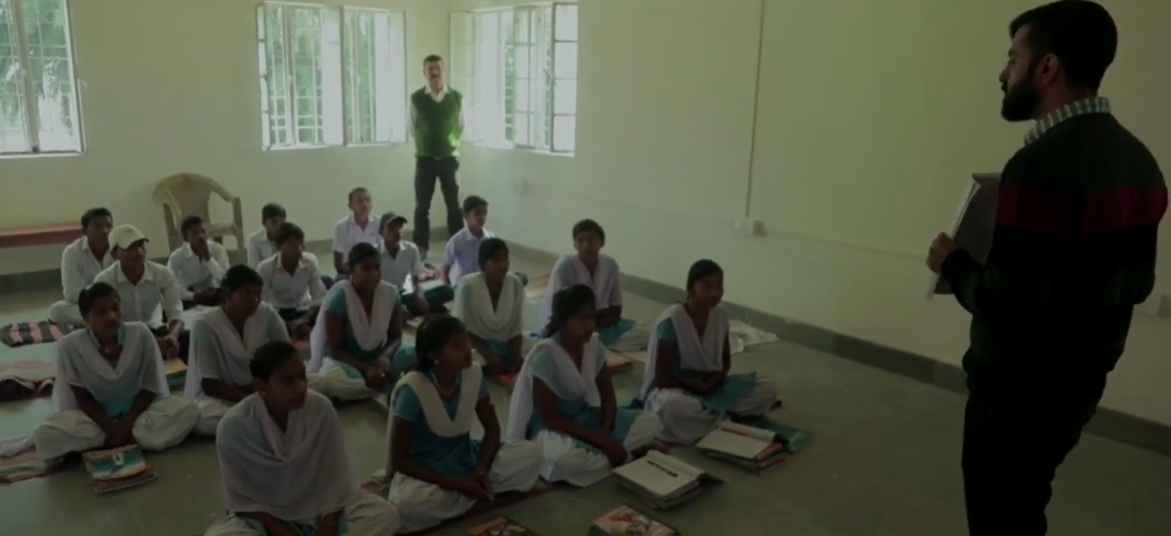
Today, Banka’s schools are different. Children come to school. They sit in digital classrooms. They take daily assessments. They ask questions. Their scores are tracked. And parents who were once indifferent, now advocate for the programme’s expansion. Unnayan Banka is more than an education project. It is proof that change is possible.
BACKGROUND AND NEED
Banka district sits in the southeastern corner of Bihar, a region historically marked by Left Wing Extremism, extreme poverty, and deep structural inequality. With a literacy rate of just 58.17%, nearly 12 percentage points below the national average. Banka was exactly the kind of district that government education initiatives tended to bypass rather than transform.
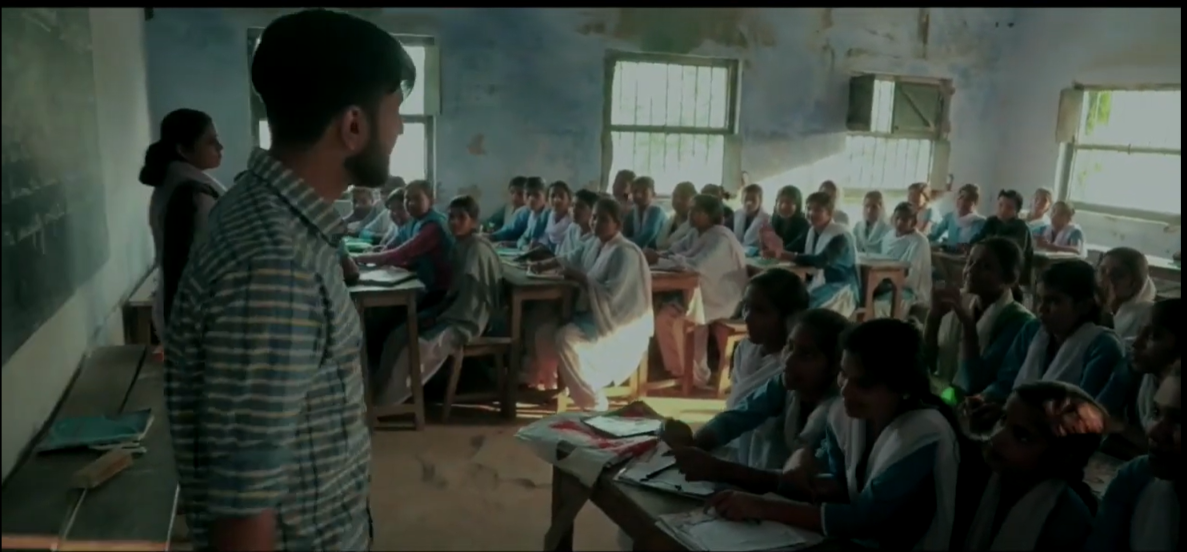
Before Unnayan Banka launched in August 2017, the reality in government secondary schools was grim. School attendance averaged 17%. Teachers frequently found themselves speaking to near-empty classrooms. Class X pass percentages were stuck at 38%, among the lowest in the state. Infrastructure was poor, classrooms were cramped, teaching materials were scarce, and there was no system to track student progress or hold anyone accountable.
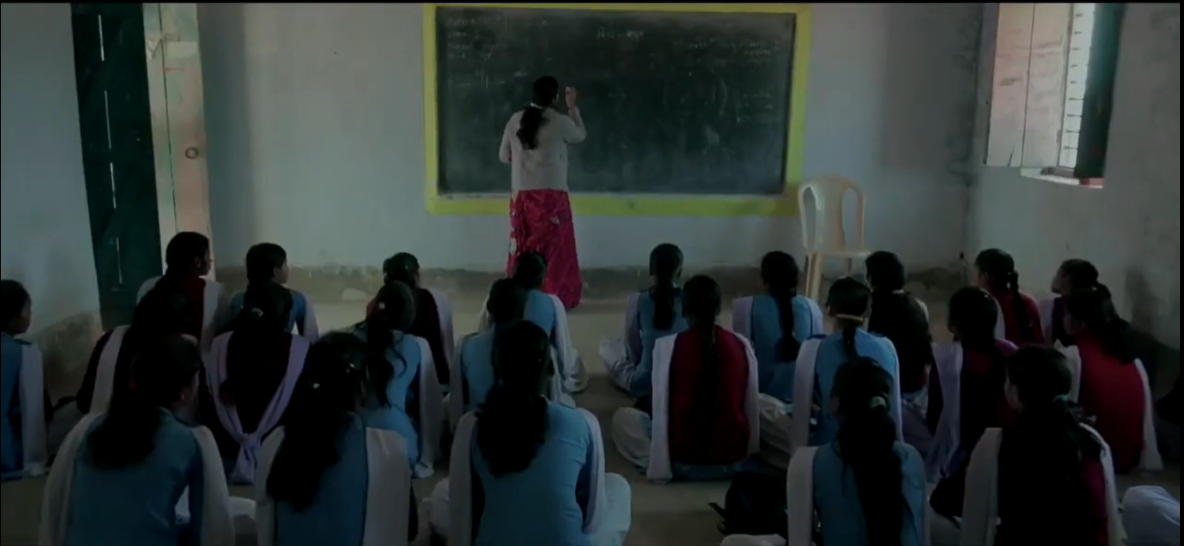
For girls in particular, the situation was even more precarious. Families in underserved areas saw little reason to send daughters to schools that offered no clear academic outcome. Dropout rates were high, and the aspirational link between education and opportunity had been broken for most families in the district.
The problem was not just about resources. It was about the absence of a system. A structured, monitored, data-driven approach that could hold schools accountable, motivate students, and give teachers a meaningful role in transformation. That was precisely the gap Unnayan Banka was designed to fill.
HOW IT WORKS
Unnayan Banka operates through a structured six-step implementation model
Infrastructure Setup
Smart TVs and LED screens are installed in existing computer labs of government schools. The Eckovation platform is configured with curriculum-mapped content for Classes IX and X, covering science, mathematics, and social studies.
Daily Digital Classes
Students attend 1.5-hour sessions six days a week (Monday–Saturday). Curriculum-aligned video lectures are delivered through the Eckovation platform, replacing rote teaching with engaging, visual learning.
Daily OMR Assessments
At the end of every session, students complete an objective-type quiz using OMR sheets. This creates a daily assessment habit and generates a rich data stream on learning outcomes.
Digital Tracking
& Analytics
OMR results are digitised and uploaded to Eckovation’s platform. AI-powered analytics generate individual digital report cards, identify weak areas per student, and flag schools that need attention.
Doubt Clearing &
Peer Support
Students use the Eckovation app to raise doubts, which are answered by a team of subject experts. This creates a 24/7 academic support loop beyond the classroom.
Administrative Monitoring & Accountability
District Magistrates, Block Education Officers, and district programme officers receive real-time dashboards and periodic reports. SARAS coordinates field-level monitoring and ensures daily sessions are delivered without disruption.
Our Work in Numbers
Unnayan Banka combined technology, innovative teaching practices, and continuous performance tracking to improve learning outcomes across all government secondary schools in the district.
SCHOOLS COVERED
143
Students Reached
5,000+
ATTENDANCE GROWTH
17% → 53%
Pass Percentage growth
38% → 71%
F.A.Q.
Frequently Asked Questions
Unnayan Banka is a technology-driven education initiative launched on 15 August 2017 in Banka district, Bihar. It transforms government secondary schools through smart classroom technology, daily digital lessons, AI-powered assessment tracking, and community engagement, all to improve attendance and board exam results.
School attendance rose from 17% to 53%. Class X pass percentages improved from 38% to 71%.
All 143 government senior secondary schools in Banka district were covered.
Absolutely. The success of Unnayan Banka directly inspired Unnayan Saran (Chapra district), the statewide Unnayan Bihar programme, and replications in Jharkhand, Arunachal Pradesh, Assam, Odisha, Uttarakhand, Gujarat, and Rajasthan.
Yes. Unnayan Banka won the Prime Minister’s Excellence Award for Innovation in 2018 and was a finalist for the Commonwealth Association for Public Administration and Management International Innovation Award in 2018.