
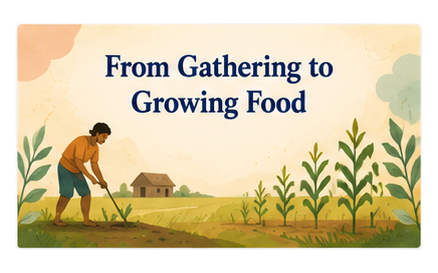
From Gathering to Growing Food
Discover how early humans became farmers and herders through engaging lessons covering domestication, permanent settlements, food storage, Neolithic technology, and important archaeological sites.
जानें कि प्रारंभिक मानव कैसे किसान और चरवाहे बने। इस अध्याय में वशीकरण, स्थायी बस्तियों, भोजन के भंडारण, नवपाषाण तकनीक तथा प्रमुख पुरातात्विक स्थलों का सरल अध्ययन किया गया है।
VIDEOS
Learn Early Farmers and Herders through interactive video lessons covering domestication, farming, animal rearing, permanent settlements, Neolithic tools, and important archaeological discoveries.
भाग 1: बसने की प्रक्रिया और खेती की शुरुआत
इस वीडियो में खेती और पशुपालन की शुरुआत का परिचय दिया गया है। विद्यार्थी सीखते हैं कि प्रारंभिक मानव ने फसल उगाना, पशुओं को पालतू बनाना, भोजन का भंडारण करना तथा स्थायी गाँव बसाना कैसे शुरू किया, जिसने मानव इतिहास की दिशा बदल दी।
Part 1: Domestication and Settled Life
This video introduces the beginning of farming and animal domestication. Students learn how early humans started growing crops, taming animals, storing food, and settling in permanent villages, marking one of the most important turning points in human history.
भाग 2: प्रारंभिक कृषि बस्तियाँ और पुरातात्विक साक्ष्य
इस वीडियो में मेहरगढ़, बुर्जहोम और दाओजाली हाडिंग जैसे प्रमुख नवपाषाण स्थलों का अध्ययन कराया गया है। विद्यार्थी समझते हैं कि पुरातात्विक खोजों के माध्यम से प्रारंभिक किसानों के जीवन, आवास, औजारों, खेती तथा तकनीकी विकास के बारे में कैसे जानकारी प्राप्त होती है।
Part 2: Early Farming Villages and Archaeological Evidence
This lesson explores important Neolithic settlements such as Mehrgarh, Burzahom, and Daojali Hading. It explains how archaeological discoveries help us understand the lives, homes, tools, farming practices, and technological progress of early farming communities.
Early Farmers and Herders
Learning Objectives
Understand how early humans shifted from hunting and gathering to farming and animal rearing. Learn about the process of domestication, the beginning of settled life, food storage methods, and the importance of early villages. Explore major archaeological sites such as Mehrgarh, Burzahom, and Daojali Hading, and understand how these discoveries help us study early human societies.
Introduction to Early Farmers and Herders
One of the greatest turning points in human history was the beginning of agriculture and animal domestication. Thousands of years ago, people gradually realized that instead of depending entirely on hunting and gathering, they could grow crops and rear animals for a regular supply of food. This discovery completely changed the way humans lived and marked the beginning of settled communities.
The development of farming encouraged people to live permanently in one place, build houses, store food, and work together as a community. Over time, these small villages became the foundation of larger societies and civilizations. Archaeological discoveries from different parts of the Indian subcontinent provide valuable evidence about the lives of these early farmers and herders.
Domestication and the Beginning of Farming
The process of growing plants and rearing animals is known as domestication. Early humans carefully selected plants that produced larger grains and stronger stems. Similarly, they chose calm and gentle animals that could be easily looked after and bred over generations.
The earliest cultivated crops included wheat and barley, while the first domesticated animals included sheep, goats, cattle, and dogs. These animals provided milk, meat, wool, protection, and assistance in everyday life. Farming and animal husbandry together ensured a more reliable supply of food than hunting and gathering alone.
As people gained experience, they learned to prepare fields, sow seeds, remove weeds, protect crops from birds and animals, and harvest ripe grains. These activities required patience and continuous care, encouraging people to remain in one place instead of moving from region to region.
Settled Life and Food Storage
The introduction of farming completely transformed human life. Since crops required several months to grow, families built permanent homes close to their fields and water sources. This marked the beginning of settled village life.
Harvesting crops also created the need for proper food storage. Early farmers stored grains in large clay pots, woven baskets, and underground storage pits to protect them from moisture, insects, and animals. Some of the stored grains were used as food, while the remaining seeds were preserved for the next farming season.
Domesticated animals became a valuable source of food and wealth. They supplied fresh milk every day and could also provide meat whenever required. As these animals reproduced naturally, they acted as a continuous source of food and became an important part of early village economies.
Archaeological Evidence of Early Farming Communities
Archaeologists study ancient villages by excavating houses, tools, grains, pottery, animal bones, and other objects buried beneath the ground. Burnt grains and animal bones help scientists identify the crops people cultivated and the animals they domesticated thousands of years ago.
These discoveries provide valuable information about agriculture, housing, food habits, technology, and the daily lives of early farming communities. Every archaeological site helps historians understand how human society gradually evolved from nomadic groups into settled villages.
Important Early Farming Sites
Mehrgarh, located in present-day Pakistan, is one of the earliest known farming villages in South Asia. Archaeologists discovered evidence of wheat, barley, sheep, goats, and cattle. Houses were built using mud bricks and contained separate rooms for living and storing harvested grains. Burials found at the site indicate that people placed valuable objects and animals beside the dead, suggesting beliefs about life after death.
Burzahom, situated in present-day Kashmir, is famous for its unique pit dwellings. People dug deep circular or rectangular pits into the ground and built their homes inside them. These underground houses protected families from the extremely cold climate. Archaeologists also discovered fireplaces both inside and outside these houses, indicating different cooking arrangements during changing seasons.
Daojali Hading, located in present-day Assam, provides evidence of farming communities living in the hills near the Brahmaputra Valley. Stone tools, polished grinding stones, pottery, and jadeite objects discovered here suggest that people cultivated crops, processed grains, and maintained trade links with distant regions, including areas that are now part of China.
The Neolithic Age and Technological Progress
The period when people began farming and using polished stone tools is known as the Neolithic Age or New Stone Age. During this period, stone tools became stronger, sharper, and more efficient than those used by earlier hunter-gatherers.
People polished stones carefully to produce axes, knives, sickles, and grinding tools suitable for agricultural work. These improved tools helped farmers clear forests, cultivate land, harvest crops, build houses, and prepare food more efficiently. The Neolithic Age marked a significant technological advancement that supported the growth of permanent settlements and organized communities.
Importance of Early Farmers and Herders
The development of farming and animal domestication changed human history forever. Permanent settlements encouraged cooperation, trade, food storage, and the growth of new occupations such as pottery, weaving, carpentry, and tool making. Communities became more organized, and people began sharing knowledge and resources.
The achievements of early farmers and herders laid the foundation for villages, towns, and eventually great civilizations. Modern agriculture, livestock farming, and settled life all trace their origins to these remarkable developments that took place thousands of years ago.
Practice Questions
- What is domestication?
- Name the earliest domesticated crops and animals.
- Why did farming encourage people to settle permanently?
- Name any two important early farming sites.
- Why is the Neolithic Age considered an important period in history?
Answer Key
ANSWER 1
Domestication is the process of growing plants and rearing animals for human use and food.
ANSWER 2
The earliest domesticated crops were wheat and barley, while the earliest domesticated animals included sheep, goats, cattle, and dogs.
ANSWER 3
Farming required people to care for crops until they were ready for harvest, encouraging them to build permanent homes near their fields and water sources.
ANSWER 4
Two important early farming sites are Mehrgarh and Burzahom. Another important site is Daojali Hading.
ANSWER 5
The Neolithic Age is important because people began farming, rearing animals, building permanent settlements, and using polished stone tools, leading to the development of organized societies.
आरंभिक किसान और चरवाहे
सीखने के उद्देश्य
समझें कि प्रारंभिक मानव ने शिकार और भोजन संग्रह से खेती तथा पशुपालन की ओर कैसे कदम बढ़ाया। बसने की प्रक्रिया, पौधों और पशुओं के वशीकरण (Domestication), भोजन के भंडारण तथा प्रारंभिक गाँवों के विकास का अध्ययन करें। मेहरगढ़, बुर्जहोम और दाओजाली हाडिंग जैसे प्रमुख पुरातात्विक स्थलों के महत्व को समझें तथा जानें कि ये खोजें प्रारंभिक मानव जीवन के बारे में क्या जानकारी देती हैं।
आरंभिक किसान और चरवाहों का परिचय
मानव इतिहास की सबसे महत्वपूर्ण घटनाओं में से एक खेती और पशुपालन की शुरुआत थी। हजारों वर्ष पहले लोगों ने यह समझा कि केवल शिकार और भोजन संग्रह पर निर्भर रहने के बजाय वे स्वयं फसल उगा सकते हैं और पशुओं को पालकर नियमित भोजन प्राप्त कर सकते हैं। इस परिवर्तन ने मानव जीवन को पूरी तरह बदल दिया और स्थायी बस्तियों की शुरुआत हुई।
खेती के विकास के साथ लोगों ने एक स्थान पर रहना शुरू किया, घर बनाए, भोजन का भंडारण किया और सामूहिक रूप से कार्य करने लगे। धीरे-धीरे छोटे-छोटे गाँव विकसित हुए, जिन्होंने आगे चलकर बड़ी सभ्यताओं की नींव रखी। भारतीय उपमहाद्वीप के अनेक पुरातात्विक स्थलों से प्राप्त प्रमाण हमें इन प्रारंभिक किसानों और चरवाहों के जीवन के बारे में महत्वपूर्ण जानकारी देते हैं।
बसने की प्रक्रिया और खेती की शुरुआत
पौधों को उगाने और पशुओं को पालने की प्रक्रिया को वशीकरण (Domestication) कहा जाता है। प्रारंभिक लोगों ने ऐसे पौधों का चयन किया जिनमें बड़े दाने और मजबूत तने होते थे। इसी प्रकार उन्होंने शांत स्वभाव वाले पशुओं को पालना शुरू किया जिन्हें आसानी से नियंत्रित और बढ़ाया जा सके।
सबसे पहले गेहूँ और जौ जैसी फसलें उगाई गईं तथा भेड़, बकरी, गाय और कुत्ते जैसे पशुओं को पालतू बनाया गया। ये पशु दूध, मांस, ऊन, सुरक्षा तथा अन्य आवश्यक कार्यों में उपयोगी थे। खेती और पशुपालन ने लोगों को भोजन का अधिक सुरक्षित और नियमित स्रोत उपलब्ध कराया।
धीरे-धीरे लोगों ने खेत तैयार करना, बीज बोना, फसलों की देखभाल करना, खरपतवार हटाना, पक्षियों और जानवरों से फसलों की रक्षा करना तथा पकने पर फसल काटना सीख लिया। इन कार्यों के कारण लोगों को लंबे समय तक एक ही स्थान पर रहना पड़ता था।
स्थायी जीवन और भोजन का भंडारण
खेती की शुरुआत के बाद लोगों का जीवन पूरी तरह बदल गया। चूँकि फसल तैयार होने में कई महीने लगते थे, इसलिए लोगों ने अपने खेतों और जल स्रोतों के पास स्थायी घर बनाने शुरू किए। यही स्थायी गाँवों की शुरुआत थी।
फसल कटने के बाद अनाज को सुरक्षित रखना भी आवश्यक था। लोग बड़े मिट्टी के बर्तनों, टोकरियों तथा जमीन में बनाए गए गड्ढों में अनाज का भंडारण करते थे। कुछ अनाज भोजन के लिए रखा जाता था, जबकि शेष अगले मौसम की बुवाई के लिए सुरक्षित रखा जाता था।
पालतू पशु भी भोजन और संपत्ति का महत्वपूर्ण स्रोत बन गए। वे प्रतिदिन दूध देते थे और आवश्यकता पड़ने पर मांस भी उपलब्ध कराते थे। समय के साथ इनकी संख्या बढ़ती गई, जिससे वे प्रारंभिक समाज के लिए चलते-फिरते खाद्य भंडार बन गए।
प्रारंभिक कृषि के पुरातात्विक प्रमाण
पुरातत्वविद् प्राचीन गाँवों की खुदाई करके घरों, औजारों, अनाज, मिट्टी के बर्तनों, पशुओं की हड्डियों तथा अन्य वस्तुओं का अध्ययन करते हैं। जले हुए अनाज और पशुओं की हड्डियाँ यह बताती हैं कि लोग कौन-सी फसलें उगाते थे और किन पशुओं को पालते थे।
इन खोजों से हमें खेती, आवास, भोजन, तकनीक तथा प्रारंभिक किसानों के दैनिक जीवन के बारे में महत्वपूर्ण जानकारी मिलती है। प्रत्येक पुरातात्विक स्थल यह समझने में सहायता करता है कि मानव समाज घुमंतू जीवन से स्थायी गाँवों तक कैसे पहुँचा।
प्रमुख प्रारंभिक कृषि स्थल
मेहरगढ़ (वर्तमान पाकिस्तान) दक्षिण एशिया के सबसे प्राचीन कृषि गाँवों में से एक माना जाता है। यहाँ गेहूँ, जौ, भेड़, बकरी और गाय के प्रमाण मिले हैं। मिट्टी की ईंटों से बने घरों में रहने और अनाज संग्रह के लिए अलग-अलग कक्ष बनाए जाते थे। यहाँ प्राप्त कब्रों से यह भी पता चलता है कि लोग मृत्यु के बाद के जीवन में विश्वास करते थे।
बुर्जहोम (वर्तमान कश्मीर) अपनी गड्ढों में बने घरों के लिए प्रसिद्ध है। यहाँ लोग जमीन में गहरे गड्ढे खोदकर उनके भीतर रहते थे, जिससे उन्हें अत्यधिक ठंड से सुरक्षा मिलती थी। यहाँ घरों के भीतर और बाहर दोनों स्थानों पर चूल्हों के प्रमाण मिले हैं।
दाओजाली हाडिंग (वर्तमान असम) से पॉलिश किए हुए पत्थर के औजार, अनाज पीसने के उपकरण, मिट्टी के बर्तन तथा जेडाइट पत्थर प्राप्त हुए हैं। इससे पता चलता है कि यहाँ के लोग खेती करते थे और दूर-दराज़ के क्षेत्रों के साथ व्यापारिक संबंध भी रखते थे।
नवपाषाण युग और तकनीकी विकास
जिस काल में लोगों ने खेती शुरू की और पॉलिश किए हुए पत्थर के औजारों का उपयोग किया, उसे नवपाषाण युग (Neolithic Age) कहा जाता है। इस समय के औजार पहले की तुलना में अधिक मजबूत, धारदार और उपयोगी थे।
लोग पत्थरों को घिसकर कुल्हाड़ी, हँसिया, चाकू तथा अनाज पीसने वाले उपकरण बनाते थे। इन औजारों की सहायता से जंगल साफ करना, खेती करना, घर बनाना और भोजन तैयार करना पहले से कहीं अधिक आसान हो गया। नवपाषाण युग मानव तकनीकी विकास का एक महत्वपूर्ण चरण था जिसने स्थायी बस्तियों और संगठित समाज के निर्माण को गति दी।
आरंभिक किसानों और चरवाहों का महत्व
खेती और पशुपालन की शुरुआत ने मानव इतिहास की दिशा बदल दी। स्थायी बस्तियों के विकास से व्यापार, भोजन का भंडारण तथा मिट्टी के बर्तन बनाना, बुनाई, बढ़ईगिरी और औजार निर्माण जैसे नए व्यवसाय विकसित हुए। समाज अधिक संगठित हुआ और लोगों के बीच सहयोग बढ़ा।
आज का कृषि प्रधान समाज, पशुपालन तथा गाँवों का विकास इन्हीं प्रारंभिक किसानों और चरवाहों की उपलब्धियों पर आधारित है। इसलिए मानव सभ्यता के विकास को समझने के लिए इस अध्याय का अध्ययन अत्यंत महत्वपूर्ण है।
अभ्यास प्रश्न
- वशीकरण (Domestication) क्या है?
- सबसे पहले कौन-सी फसलें और पशु पालतू बनाए गए?
- खेती ने लोगों को स्थायी रूप से बसने के लिए कैसे प्रेरित किया?
- दो प्रमुख प्रारंभिक कृषि स्थलों के नाम लिखिए।
- नवपाषाण युग को महत्वपूर्ण क्यों माना जाता है?
उत्तर
उत्तर 1
पौधों को उगाने और पशुओं को मानव उपयोग के लिए पालने की प्रक्रिया को वशीकरण (Domestication) कहा जाता है।
उत्तर 2
सबसे पहले गेहूँ और जौ की खेती की गई तथा भेड़, बकरी, गाय और कुत्ते जैसे पशुओं को पालतू बनाया गया।
उत्तर 3
फसलों की देखभाल और कटाई के लिए लोगों को लंबे समय तक एक ही स्थान पर रहना पड़ता था, इसलिए उन्होंने स्थायी घर और गाँव बसाए।
उत्तर 4
दो प्रमुख प्रारंभिक कृषि स्थल हैं—मेहरगढ़ और बुर्जहोम। दाओजाली हाडिंग भी एक महत्वपूर्ण स्थल है।
उत्तर 5
नवपाषाण युग महत्वपूर्ण है क्योंकि इसी काल में खेती, पशुपालन, पॉलिश किए हुए पत्थर के औजार तथा स्थायी बस्तियों का विकास हुआ, जिसने संगठित समाज की नींव रखी।