
Chapter 1
तीन महाद्वीपों में फैला साम्राज्य
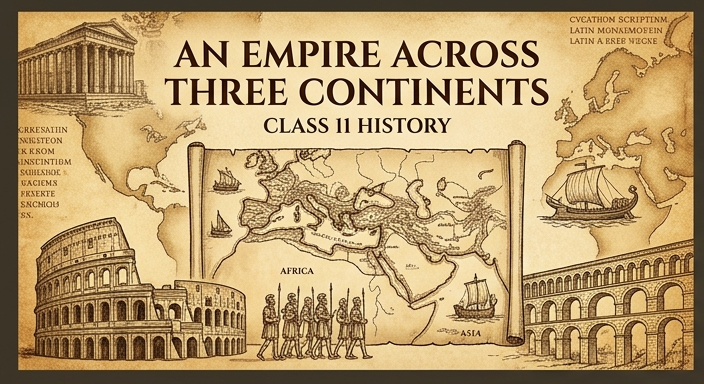
An Empire Across Three Continents
इस अध्याय में रोमन साम्राज्य की विशाल और समृद्ध सभ्यता की यात्रा करें, जो यूरोप, एशिया और अफ्रीका—तीन महाद्वीपों में फैली हुई थी। इसमें आप साम्राज्य की राजनीतिक व्यवस्था, अर्थव्यवस्था, समाज, संस्कृति तथा महत्वपूर्ण उपलब्धियों का अध्ययन करेंगे और विश्व इतिहास पर इसके स्थायी प्रभाव को समझेंगे।
This chapter takes you through the empire’s political structure, economy, society, culture, and remarkable achievements, helping you understand its lasting influence on world history.
VIDEOS
An empire across three continents: Part 1
मन साम्राज्य का परिचय, यूरोप, एशिया और अफ्रीका में इसका विशाल भौगोलिक विस्तार, और इसके इतिहास के पुनर्निर्माण के लिए उपयोग किए जाने वाले प्राथमिक स्रोतों की जानकारी।
Introduction to the Roman Empire, its vast geographical extent across Europe, Asia, and Africa, and the primary sources used to reconstruct its history.
An empire across three continents: Part 2
साम्राज्य की आर्थिक समृद्धि की व्याख्या, जिसमें व्यापारिक मार्गों, कृषि उत्पादन (शराब, जैतून का तेल), और अर्थव्यवस्था में दासों की भूमिका पर ध्यान केंद्रित किया गया है।
Explains the economic prosperity of the empire, focusing on trade routes, agricultural production (wine, olive oil), and the role of slavery in the economy.
An empire across three continents: Part 3
रोमन समाज के सामाजिक ढांचे की चर्चा, जिसमें अभिजात वर्ग (सीनेटर), मध्यम वर्ग (इक्वाइट्स), और निम्न वर्ग के साथ-साथ पारिवारिक जीवन और मनोरंजन के साधनों का वर्णन है।
Discusses the social structure of Roman society, including the elite (senators), the middle classes (equites), and the lower classes, alongside family life and entertainment.
An empire across three continents: Part 4
गणतंत्र से साम्राज्य में परिवर्तन का विश्लेषण, रोमन सम्राट की शक्ति, सैन्य संगठन, और साम्राज्य को चलाने वाली प्रशासनिक मशीनरी की कार्यप्रणाली।
Examines the transition from the Republic to the Empire, the power of the Roman Emperor, the military organization, and the administrative machinery.
An empire across three continents: Part5
”तीसरी शताब्दी के संकट’ पर ध्यान केंद्रित करना, ईसाई धर्म का उदय, प्रशासनिक और आर्थिक चुनौतियां, और अंततः साम्राज्य का पतन तथा विभाजन।
Focuses on the “Crisis of the Third Century,” the rise of Christianity, the administrative and economic challenges, and the ultimate decline and division of the empire.
NOTES
An Empire Across Three Continents
Introduction
The Roman Empire was one of the largest and most powerful empires of the ancient world. It spread across Europe, North Africa and parts of Asia. The Mediterranean Sea was at the centre of the empire and connected its different regions. The Roman Empire had a strong army, organised administration, developed cities and a large trading network.
Geographical Extent
Three Continents
The Roman Empire covered territories in:
- Europe
- Africa
- Asia
The Mediterranean Sea was extremely important to the empire. The Romans called it Mare Nostrum, meaning “Our Sea.”
The empire included areas such as Italy, Spain, Gaul, Britain, Egypt, Syria and parts of North Africa.
Political Organisation
The Emperor
The Roman Empire was ruled by an emperor who had great political and military power. The emperor was assisted by officials, governors and the army.
The huge empire was controlled through:
- Provincial administration
- Collection of taxes
- Roman laws
- A strong army
- Roads and communication networks
The Senate
The Senate was an important institution during the Roman Republic. Under the Roman Empire, its political power decreased, but it continued to have prestige and influence.
The Roman Army
Role of the Army
The Roman army was one of the most powerful and disciplined armies of the ancient world. It helped Rome to:
- Conquer new territories
- Protect its borders
- Maintain peace and order
- Control rebellions
The army was divided into large military units called legions. Roman soldiers were well-trained and disciplined.
Economy and Trade
Agriculture
Agriculture was the main occupation of the people. Large agricultural estates called latifundia existed in many parts of the empire.
Important crops included:
- Wheat
- Olives
- Grapes
Trade
The Mediterranean Sea was the main centre of Roman trade. Goods were transported between different parts of the empire through sea and land routes.
Important trade items included:
- Grain
- Wine
- Olive oil
- Metals
- Textiles
- Spices
- Slaves
The Romans also had trade relations with regions outside the empire, including India and China.
Cities and Urban Life
Major Cities
Rome was the political centre of the empire. Other important cities included Alexandria and Antioch, which were major centres of trade and culture.
Roman cities generally had:
- Roads
- Markets
- Public baths
- Theatres
- Temples
- Aqueducts
The Roman road network connected different parts of the empire and helped in the movement of soldiers, officials and goods.
Roman Society
Social Classes
Roman society was divided into different social groups. These included:
- Senators and wealthy aristocrats
- Equestrians
- Ordinary citizens
- Freed persons
- Slaves
Social status depended on factors such as wealth, citizenship and family background.
Slavery
Slavery was an important part of Roman society and economy. Slaves worked in:
- Agriculture
- Mines
- Households
- Workshops
Some slaves were later freed and became known as freedmen.
Women and Family Life
Position of Women
Women generally had limited formal political rights. However, they could have an important role in family and social life.
Wealthy Roman women could own property and manage financial matters. Marriage and family were important parts of Roman society.
Religion and Christianity
Roman Religion
The Romans originally worshipped many gods and goddesses. Religious traditions were closely connected with Roman society and political life. The emperors were also associated with religious practices and emperor worship.
Rise of Christianity
Christianity began in the Roman Empire and gradually spread throughout its territories. In the beginning, Christians sometimes faced persecution.
Under Constantine, Christianity received imperial support. Later, Christianity became the official religion of the Roman Empire.
The Late Roman Empire
Problems Faced by the Empire
In its later period, the Roman Empire faced many challenges:
- Political instability
- Economic difficulties
- Heavy taxation
- Military pressure
- Invasions by outside groups
The enormous size of the empire also made administration difficult.
Division of the Empire
The Roman Empire was eventually divided into Eastern and Western parts to make administration easier.
The Western Roman Empire declined and traditionally came to an end in 476 CE.
The Eastern Roman Empire, later known as the Byzantine Empire, continued for many centuries.
Roman Achievements
Contributions
The Romans made important contributions in many fields:
- Law and administration
- Architecture
- Engineering
- Road construction
- Aqueducts
- Urban planning
- Language and literature
Roman laws and political ideas influenced many later societies.
Key Points
- The Roman Empire spread across Europe, Africa and Asia.
- The Mediterranean Sea was central to Roman trade and communication.
- The emperor was the most powerful political figure.
- The Roman army helped in expansion and maintaining control.
- Agriculture was the main occupation.
- Trade connected different parts of the empire.
- Roman society was divided into different social classes.
- Slavery was an important part of the Roman economy.
- Christianity gradually spread throughout the empire.
- The empire was divided into Eastern and Western parts.
- The Western Roman Empire ended in 476 CE.
Chapter Summary
The Roman Empire was a vast empire spread across three continents and centred around the Mediterranean Sea. Its powerful army, organised administration, developed cities, roads and trade networks helped it control a huge territory. Roman society had different social classes, and slavery played an important role in the economy. Christianity gradually became an important religion in the empire. Political, economic and military problems weakened the Western Roman Empire, which finally collapsed in 476 CE, while the Eastern Roman Empire continued for many centuries.
तीन महाद्वीपों में फैला एक साम्राज्य
परिचय
रोमन साम्राज्य प्राचीन विश्व के सबसे बड़े और शक्तिशाली साम्राज्यों में से एक था। यह यूरोप, उत्तरी अफ्रीका और एशिया के कुछ भागों तक फैला हुआ था। भूमध्य सागर साम्राज्य के केंद्र में था और इसके विभिन्न क्षेत्रों को जोड़ता था। रोमन साम्राज्य की शक्ति एक मजबूत सेना, संगठित प्रशासन, विकसित नगरों और व्यापक व्यापारिक नेटवर्क पर आधारित थी।
भौगोलिक विस्तार
तीन महाद्वीप
रोमन साम्राज्य निम्नलिखित महाद्वीपों तक फैला हुआ था:
- यूरोप
- अफ्रीका
- एशिया
भूमध्य सागर साम्राज्य के लिए बहुत महत्वपूर्ण था। रोमन इसे Mare Nostrum कहते थे, जिसका अर्थ “हमारा समुद्र” है।
साम्राज्य में इटली, स्पेन, गॉल, ब्रिटेन, मिस्र, सीरिया और उत्तरी अफ्रीका के कुछ क्षेत्र शामिल थे।
राजनीतिक संगठन
सम्राट
रोमन साम्राज्य का शासन एक सम्राट के हाथों में था, जिसके पास बहुत अधिक राजनीतिक और सैन्य शक्ति थी। सम्राट को अधिकारियों, प्रांतीय शासकों और सेना का सहयोग प्राप्त होता था।
विशाल साम्राज्य को नियंत्रित करने के लिए:
- प्रांतीय प्रशासन
- कर संग्रह
- रोमन कानून
- शक्तिशाली सेना
- सड़क और संचार व्यवस्था
का उपयोग किया जाता था।
सीनेट
सीनेट रोमन गणराज्य के समय एक महत्वपूर्ण संस्था थी। रोमन साम्राज्य के समय इसकी राजनीतिक शक्ति कम हो गई, लेकिन इसका सम्मान और प्रभाव बना रहा।
रोमन सेना
सेना की भूमिका
रोमन सेना प्राचीन विश्व की सबसे शक्तिशाली और अनुशासित सेनाओं में से एक थी। इसने रोम को:
- नए क्षेत्रों पर विजय प्राप्त करने
- सीमाओं की रक्षा करने
- शांति और व्यवस्था बनाए रखने
- विद्रोहों को नियंत्रित करने
में सहायता की।
रोमन सेना को बड़े सैन्य दलों में विभाजित किया गया था जिन्हें लीजन (Legions) कहा जाता था। रोमन सैनिक अच्छी तरह प्रशिक्षित और अनुशासित होते थे।
अर्थव्यवस्था और व्यापार
कृषि
कृषि लोगों का मुख्य व्यवसाय था। साम्राज्य के कई भागों में बड़े कृषि फार्म मौजूद थे जिन्हें लैटिफुंडिया (Latifundia) कहा जाता था।
मुख्य फसलें थीं:
- गेहूँ
- जैतून
- अंगूर
व्यापार
भूमध्य सागर रोमन व्यापार का मुख्य केंद्र था। समुद्री और स्थल मार्गों के द्वारा साम्राज्य के विभिन्न भागों के बीच वस्तुओं का व्यापार होता था।
मुख्य व्यापारिक वस्तुएँ थीं:
- अनाज
- शराब
- जैतून का तेल
- धातुएँ
- वस्त्र
- मसाले
- दास
रोमन साम्राज्य का भारत और चीन जैसे साम्राज्य के बाहर के क्षेत्रों के साथ भी व्यापारिक संबंध था।
नगर और शहरी जीवन
प्रमुख नगर
रोम साम्राज्य का राजनीतिक केंद्र था। अलेक्जेंड्रिया और एंटिओक अन्य महत्वपूर्ण नगर थे, जो व्यापार और संस्कृति के प्रमुख केंद्र थे।
रोमन नगरों में सामान्यतः:
- सड़कें
- बाजार
- सार्वजनिक स्नानघर
- थिएटर
- मंदिर
- जलसेतु
होते थे।
रोमन सड़कों का विस्तृत नेटवर्क साम्राज्य के विभिन्न भागों को जोड़ता था और सैनिकों, अधिकारियों तथा वस्तुओं के आवागमन में सहायता करता था।
रोमन समाज
सामाजिक वर्ग
रोमन समाज विभिन्न सामाजिक समूहों में विभाजित था। इनमें शामिल थे:
- सीनेटर और धनी कुलीन
- घुड़सवार वर्ग
- सामान्य नागरिक
- मुक्त किए गए व्यक्ति
- दास
सामाजिक स्थिति धन, नागरिकता और पारिवारिक पृष्ठभूमि जैसे कारकों पर निर्भर करती थी।
दास प्रथा
दास प्रथा रोमन समाज और अर्थव्यवस्था का महत्वपूर्ण हिस्सा थी। दास:
- कृषि
- खदानों
- घरों
- कार्यशालाओं
में काम करते थे।
कुछ दासों को बाद में स्वतंत्र कर दिया जाता था और वे मुक्त व्यक्ति (Freedmen) कहलाते थे।
महिलाएँ और पारिवारिक जीवन
महिलाओं की स्थिति
महिलाओं को सामान्यतः औपचारिक राजनीतिक अधिकार सीमित रूप में प्राप्त थे। हालांकि, परिवार और सामाजिक जीवन में उनकी महत्वपूर्ण भूमिका हो सकती थी।
धनी रोमन महिलाएँ संपत्ति रख सकती थीं और आर्थिक मामलों का प्रबंधन कर सकती थीं। विवाह और परिवार रोमन समाज के महत्वपूर्ण अंग थे।
धर्म और ईसाई धर्म
रोमन धर्म
प्रारंभ में रोमन लोग अनेक देवी-देवताओं की पूजा करते थे। धार्मिक परंपराएँ रोमन समाज और राजनीतिक जीवन से जुड़ी हुई थीं। सम्राट भी धार्मिक परंपराओं और सम्राट पूजा से जुड़े हुए थे।
ईसाई धर्म का उदय
ईसाई धर्म का उदय रोमन साम्राज्य में हुआ और धीरे-धीरे यह साम्राज्य के विभिन्न क्षेत्रों में फैल गया। प्रारंभ में ईसाइयों को कभी-कभी उत्पीड़न का सामना करना पड़ा।
कॉन्स्टेंटाइन के शासनकाल में ईसाई धर्म को शाही समर्थन मिला। बाद में ईसाई धर्म रोमन साम्राज्य का आधिकारिक धर्म बन गया।
उत्तरकालीन रोमन साम्राज्य
साम्राज्य के सामने समस्याएँ
बाद के समय में रोमन साम्राज्य को कई चुनौतियों का सामना करना पड़ा:
- राजनीतिक अस्थिरता
- आर्थिक समस्याएँ
- भारी कर
- सैन्य दबाव
- बाहरी समूहों के आक्रमण
साम्राज्य का आकार बहुत बड़ा होने के कारण उसका प्रशासन भी कठिन होता गया।
साम्राज्य का विभाजन
प्रशासन को आसान बनाने के लिए रोमन साम्राज्य को अंततः पूर्वी और पश्चिमी भागों में विभाजित किया गया।
पश्चिमी रोमन साम्राज्य कमजोर हुआ और परंपरागत रूप से इसका अंत 476 ईस्वी में माना जाता है।
पूर्वी रोमन साम्राज्य, जिसे बाद में बाइजेंटाइन साम्राज्य कहा गया, कई शताब्दियों तक अस्तित्व में रहा।
रोमन उपलब्धियाँ
योगदान
रोमन लोगों ने कई क्षेत्रों में महत्वपूर्ण योगदान दिया:
- कानून और प्रशासन
- वास्तुकला
- इंजीनियरिंग
- सड़क निर्माण
- जलसेतु
- नगर नियोजन
- भाषा और साहित्य
रोमन कानून और राजनीतिक विचारों ने बाद की कई सभ्यताओं को प्रभावित किया।
मुख्य बिंदु
- रोमन साम्राज्य यूरोप, अफ्रीका और एशिया तक फैला था।
- भूमध्य सागर रोमन व्यापार और संचार का केंद्र था।
- सम्राट सबसे शक्तिशाली राजनीतिक व्यक्ति था।
- रोमन सेना ने विस्तार और नियंत्रण बनाए रखने में महत्वपूर्ण भूमिका निभाई।
- कृषि मुख्य व्यवसाय था।
- व्यापार ने साम्राज्य के विभिन्न भागों को जोड़ा।
- रोमन समाज विभिन्न सामाजिक वर्गों में विभाजित था।
- दास प्रथा रोमन अर्थव्यवस्था का महत्वपूर्ण हिस्सा थी।
- ईसाई धर्म धीरे-धीरे पूरे साम्राज्य में फैल गया।
- साम्राज्य को पूर्वी और पश्चिमी भागों में विभाजित किया गया।
- पश्चिमी रोमन साम्राज्य का अंत 476 ईस्वी में हुआ।
अध्याय सारांश
रोमन साम्राज्य भूमध्य सागर के आसपास केंद्रित एक विशाल साम्राज्य था, जो तीन महाद्वीपों तक फैला हुआ था। इसकी शक्तिशाली सेना, संगठित प्रशासन, विकसित नगरों, सड़कों और व्यापारिक नेटवर्क ने इसे विशाल क्षेत्र पर नियंत्रण बनाए रखने में सहायता की। रोमन समाज विभिन्न सामाजिक वर्गों में विभाजित था और दास प्रथा अर्थव्यवस्था का महत्वपूर्ण हिस्सा थी। ईसाई धर्म धीरे-धीरे साम्राज्य का प्रमुख धर्म बन गया। राजनीतिक, आर्थिक और सैन्य समस्याओं के कारण पश्चिमी रोमन साम्राज्य कमजोर हुआ और 476 ईस्वी में उसका पतन हो गया, जबकि पूर्वी रोमन साम्राज्य कई शताब्दियों तक बना रहा।