
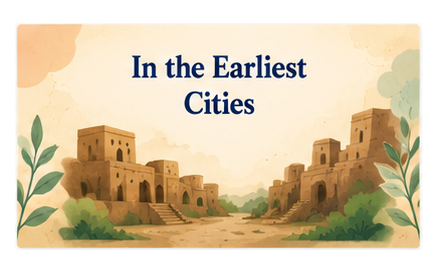
In the Earliest Cities
Discover the fascinating Harappan Civilization and explore its well-planned cities, remarkable architecture, advanced drainage system, trade, crafts, and the rise and decline of the earliest urban settlements.
हड़प्पा सभ्यता के सुव्यवस्थित नगरों, उन्नत वास्तुकला, जल निकासी व्यवस्था, व्यापार, शिल्पकला तथा विश्व की सबसे प्राचीन नगर सभ्यताओं में से एक के विकास और पतन का अध्ययन करें।
VIDEOS
Learn Earliest Cities through engaging video lessons covering the Harappan Civilization, city planning, architecture, trade, craftsmanship, and the earliest urban settlements.
भाग 1: हड़प्पा की खोज और नगर नियोजन
इस वीडियो में हड़प्पा सभ्यता की खोज तथा विश्व की सबसे प्राचीन नगर सभ्यताओं में से एक के विकास का परिचय दिया गया है। विद्यार्थी नगर दुर्ग, निचला नगर तथा हड़प्पा नगरों की उन्नत नगर योजना के बारे में सीखते हैं।
Part 1: Discovery of Harappa and City Planning
This video introduces the discovery of the Harappan Civilization and explains how archaeologists uncovered one of the world’s earliest urban societies. Students learn about the layout of Harappan cities, including the Citadel, Lower Town, and the advanced planning that made these cities unique.
भाग 2: हड़प्पा का जीवन, व्यापार, शिल्प और सभ्यता का पतन
इस वीडियो में हड़प्पा सभ्यता के लोगों के दैनिक जीवन, व्यापार, शिल्पकला, धोलावीरा और लोथल जैसे प्रमुख नगरों तथा इस महान सभ्यता के पतन के संभावित कारणों की व्याख्या की गई है।
Part 2: Life, Trade, Crafts, and the Decline of the Harappan Civilization
This lesson explores the daily life of the Harappan people, their occupations, craftsmanship, trade networks, and important cities like Dholavira and Lothal. Students also learn about the possible reasons behind the decline of this remarkable civilization.
Earliest Cities
Learning Objectives
Understand the origin and significance of the Harappan Civilization. Explore the remarkable town planning, architecture, lifestyle, crafts, trade, and occupations of the Harappan people. Learn about important cities such as Harappa, Mohenjodaro, Dholavira, and Lothal, and understand the possible reasons behind the decline of one of the world’s earliest urban civilizations.
Introduction to the Earliest Cities
The Harappan Civilization, also known as the Indus Valley Civilization, was one of the earliest urban civilizations in the world. It flourished nearly 4,700 years ago along the banks of the Indus River and its tributaries. The discovery of Harappa completely changed our understanding of ancient Indian history and revealed that highly organized cities existed long before many other civilizations.
Archaeologists have discovered several Harappan cities across present-day India and Pakistan. These cities demonstrate advanced planning, excellent engineering, and a well-organized society that valued cleanliness, trade, craftsmanship, and efficient administration.
Discovery of Harappa and the Growth of Early Cities
The ruins of Harappa were first noticed about 150 years ago when engineers were constructing railway tracks in Punjab. Thousands of ancient bricks were removed from the site without realizing their historical importance. Several decades later, archaeologists carefully excavated the area and discovered that Harappa belonged to one of the oldest civilizations in the Indian subcontinent.
As more ancient settlements were discovered, historians recognized them as part of a single civilization known as the Harappan Civilization. These cities developed along rivers that provided water, fertile land, and convenient transport routes for agriculture and trade.
The Harappan people built large cities with well-planned streets, public buildings, marketplaces, workshops, and residential areas. Their achievements demonstrate remarkable knowledge of architecture, engineering, and urban planning.
Town Planning and Architecture
One of the most outstanding features of the Harappan Civilization was its carefully planned cities. Most cities were divided into two main sections—the Citadel, built on a raised platform, and the Lower Town, where most people lived.
The citadel contained important public buildings and administrative structures, while the lower town consisted of neatly arranged residential houses. Streets were laid out in a grid pattern, crossing each other at right angles, making transportation and movement easier.
Harappan houses were built using strong baked bricks and often had one or two storeys. Many homes included courtyards, wells, bathrooms, and drainage outlets. One of the greatest engineering achievements of the civilization was its advanced drainage system. Covered drains ran alongside roads, carrying wastewater away from houses and keeping the cities clean.
The famous Great Bath at Mohenjodaro was a large public water tank surrounded by changing rooms. Built with baked bricks and waterproof materials, it was probably used for religious ceremonies and ritual bathing.
Daily Life, Crafts, and Trade
The Harappan people lived organized and prosperous lives. Many worked as farmers, craftsmen, traders, potters, metal workers, bead makers, and builders. Skilled artisans produced beautiful pottery, jewellery, tools, seals, toys, and sculptures using stone, clay, copper, bronze, gold, and silver.
Children played with clay toys, miniature carts, and animal figures, showing that recreation was also an important part of daily life. Merchants traded goods both within the civilization and with distant regions.
The Harappans imported valuable raw materials such as copper, tin, precious stones, and shells from different parts of India and neighbouring countries. These materials were transformed into finished products that were traded across vast distances, making the civilization economically strong.
Important Harappan Cities
Several Harappan cities have been discovered, each with unique features. Harappa and Mohenjodaro were among the largest and most important urban centres.
Dholavira, located in present-day Gujarat, was unique because it was divided into three sections and protected by massive stone walls. The city also had an advanced water conservation system designed to store rainwater.
Lothal, also in Gujarat, became an important port city because of its large dockyard. Ships could enter through connected waterways, allowing traders to transport goods to distant lands. This made Lothal one of the earliest known centres of maritime trade.
Decline of the Harappan Civilization
Around 3,900 years ago, the Harappan Civilization gradually began to decline. People abandoned many cities, writing disappeared, trade reduced, and public buildings fell into disrepair. Historians believe several factors may have contributed to this decline.
Possible reasons include changing river courses, repeated floods, prolonged droughts, deforestation, environmental changes, and shortages of essential resources. Although the exact cause remains uncertain, the civilization slowly disappeared, giving way to new cultures and settlements across the Indian subcontinent.
Even today, archaeologists continue to study Harappan sites to uncover new information about this remarkable civilization and its contributions to human history.
Practice Questions
- What is the Harappan Civilization?
- Name the two main parts of a Harappan city.
- Why is the Great Bath of Mohenjodaro famous?
- Name two important Harappan cities in Gujarat.
- Mention any two possible reasons for the decline of the Harappan Civilization.
Answer Key
ANSWER 1
The Harappan Civilization, also known as the Indus Valley Civilization, was one of the world’s earliest urban civilizations that flourished about 4,700 years ago along the Indus River and its tributaries.
ANSWER 2
The two main parts of a Harappan city were the Citadel and the Lower Town.
ANSWER 3
The Great Bath is famous because it was a large waterproof public bathing tank, probably used for religious ceremonies and ritual bathing.
ANSWER 4
Two important Harappan cities in Gujarat are Dholavira and Lothal.
ANSWER 5
Possible reasons for the decline include changes in river courses, floods, droughts, deforestation, and environmental changes.
प्रारंभिक नगर
सीखने के उद्देश्य
हड़प्पा सभ्यता की उत्पत्ति और उसके महत्व को समझना। हड़प्पा नगरों की योजना, वास्तुकला, जीवन शैली, शिल्प, व्यापार तथा प्रमुख व्यवसायों का अध्ययन करना। हड़प्पा, मोहनजोदड़ो, धोलावीरा और लोथल जैसे महत्वपूर्ण नगरों के बारे में जानना तथा इस महान सभ्यता के पतन के संभावित कारणों को समझना।
प्रारंभिक नगरों का परिचय
हड़प्पा सभ्यता, जिसे सिंधु घाटी सभ्यता भी कहा जाता है, विश्व की सबसे प्राचीन नगर सभ्यताओं में से एक थी। यह लगभग 4,700 वर्ष पूर्व सिंधु नदी और उसकी सहायक नदियों के किनारे विकसित हुई। इस सभ्यता की खोज ने प्राचीन भारत के इतिहास के बारे में हमारी समझ को पूरी तरह बदल दिया और यह सिद्ध किया कि उस समय भी अत्यंत विकसित नगर बस चुके थे।
पुरातत्वविदों ने भारत और पाकिस्तान के अनेक स्थानों पर हड़प्पा सभ्यता के नगरों की खोज की है। इन नगरों से पता चलता है कि उस समय के लोग नगर नियोजन, स्वच्छता, व्यापार, शिल्पकला तथा प्रशासन में अत्यंत उन्नत थे।
हड़प्पा की खोज और नगरों का विकास
लगभग 150 वर्ष पहले पंजाब में रेलवे लाइन बिछाते समय इंजीनियरों को हड़प्पा के प्राचीन अवशेष मिले। उन्होंने उन स्थानों से हजारों पकी हुई ईंटें निकालकर रेलवे निर्माण में उपयोग कर लीं, क्योंकि उन्हें उनके ऐतिहासिक महत्व का ज्ञान नहीं था। बाद में पुरातत्वविदों ने व्यवस्थित खुदाई करके यह सिद्ध किया कि यह स्थान विश्व की सबसे प्राचीन सभ्यताओं में से एक का भाग था।
इसके बाद अनेक अन्य नगरों की खोज हुई और इतिहासकारों ने इन्हें मिलाकर हड़प्पा सभ्यता का नाम दिया। ये नगर नदियों के किनारे बसे थे जहाँ कृषि, जल तथा व्यापार के लिए अनुकूल परिस्थितियाँ उपलब्ध थीं।
हड़प्पा के नगर सुव्यवस्थित सड़कों, मजबूत भवनों, सार्वजनिक संरचनाओं, बाजारों तथा आवासीय क्षेत्रों के साथ अत्यंत योजनाबद्ध ढंग से बनाए गए थे।
नगर नियोजन और वास्तुकला
हड़प्पा सभ्यता की सबसे बड़ी विशेषता उसका उत्कृष्ट नगर नियोजन था। अधिकांश नगर दो मुख्य भागों में विभाजित थे—नगर दुर्ग (Citadel) तथा निचला नगर (Lower Town)।
नगर दुर्ग ऊँचे चबूतरे पर बनाया जाता था जहाँ महत्वपूर्ण सार्वजनिक भवन तथा प्रशासनिक संरचनाएँ स्थित थीं। निचले नगर में सामान्य लोग रहते थे। नगरों की सड़कें सीधी थीं और एक-दूसरे को समकोण पर काटती थीं, जिससे यातायात और आवागमन व्यवस्थित रहता था।
अधिकांश मकान मजबूत पकी हुई ईंटों से बने होते थे। कई मकानों में आँगन, स्नानघर, कुएँ तथा जल निकासी की व्यवस्था होती थी। हड़प्पा सभ्यता की सबसे महत्वपूर्ण उपलब्धियों में उसकी उन्नत जल निकासी व्यवस्था थी। ढकी हुई नालियाँ प्रत्येक घर से निकलकर मुख्य नालियों से जुड़ती थीं, जिससे पूरे नगर में स्वच्छता बनी रहती थी।
मोहनजोदड़ो का प्रसिद्ध महान स्नानागार इस सभ्यता की उत्कृष्ट इंजीनियरिंग का अद्भुत उदाहरण है। यह जलरोधी ईंटों से बना विशाल स्नान कुंड था, जिसका उपयोग संभवतः धार्मिक अनुष्ठानों और सामूहिक स्नान के लिए किया जाता था।
दैनिक जीवन, शिल्प और व्यापार
हड़प्पा सभ्यता के लोग कृषि, व्यापार और विभिन्न प्रकार के शिल्प कार्यों में निपुण थे। किसान खेती करते थे, जबकि कारीगर मिट्टी के बर्तन, आभूषण, धातु के उपकरण, खिलौने, मूर्तियाँ तथा सुंदर मोहरें बनाते थे। ताँबा, काँसा, सोना, चाँदी, पत्थर और मिट्टी का उपयोग विभिन्न वस्तुएँ बनाने में किया जाता था।
बच्चे मिट्टी से बने खिलौनों, पशु आकृतियों और पहियों वाली गाड़ियों से खेलते थे। व्यापारियों का दूर-दूर तक व्यापार होता था और वे अन्य क्षेत्रों से ताँबा, टिन, कीमती पत्थर तथा शंख जैसी वस्तुएँ मँगाकर उनका उपयोग सुंदर वस्तुएँ बनाने में करते थे।
इस विकसित व्यापार व्यवस्था ने हड़प्पा सभ्यता को आर्थिक रूप से समृद्ध बनाया और दूरस्थ क्षेत्रों के साथ उसके संबंध स्थापित किए।
हड़प्पा सभ्यता के प्रमुख नगर
हड़प्पा और मोहनजोदड़ो इस सभ्यता के सबसे प्रसिद्ध नगर थे। इनके अतिरिक्त धोलावीरा और लोथल भी अत्यंत महत्वपूर्ण नगर थे।
धोलावीरा वर्तमान गुजरात में स्थित था और इसकी विशेषता यह थी कि यह तीन भागों में विभाजित था तथा विशाल पत्थर की दीवारों से सुरक्षित था। यहाँ वर्षा जल संग्रह की उन्नत व्यवस्था भी विकसित की गई थी।
लोथल गुजरात का एक महत्वपूर्ण बंदरगाह नगर था। यहाँ विशाल गोदी (Dockyard) बनाई गई थी जहाँ जहाज़ आकर व्यापारिक वस्तुओं का आदान-प्रदान करते थे। यह नगर प्राचीन समुद्री व्यापार का महत्वपूर्ण केंद्र था।
हड़प्पा सभ्यता का पतन
लगभग 3,900 वर्ष पूर्व हड़प्पा सभ्यता का धीरे-धीरे पतन प्रारंभ हुआ। अनेक नगरों को छोड़ दिया गया, व्यापार कम होने लगा, लेखन प्रणाली का प्रयोग बंद हो गया तथा नगरों की सार्वजनिक व्यवस्थाएँ कमजोर पड़ गईं।
इतिहासकारों के अनुसार नदियों का मार्ग बदल जाना, बार-बार आने वाली बाढ़, लंबे समय तक सूखा पड़ना, जंगलों की कटाई तथा प्राकृतिक संसाधनों की कमी इसके संभावित कारण हो सकते हैं। यद्यपि इसके वास्तविक कारण आज भी पूरी तरह स्पष्ट नहीं हैं, फिर भी यह सभ्यता मानव इतिहास की सबसे महान नगर सभ्यताओं में गिनी जाती है।
आज भी पुरातत्वविद् नई खोजों के माध्यम से इस महान सभ्यता के बारे में नई जानकारियाँ प्राप्त कर रहे हैं।
अभ्यास प्रश्न
- हड़प्पा सभ्यता क्या थी?
- हड़प्पा नगर के दो मुख्य भाग कौन-से थे?
- मोहनजोदड़ो का महान स्नानागार क्यों प्रसिद्ध है?
- गुजरात के दो प्रमुख हड़प्पा नगरों के नाम लिखिए।
- हड़प्पा सभ्यता के पतन के कोई दो कारण लिखिए।
उत्तर
उत्तर 1
हड़प्पा सभ्यता या सिंधु घाटी सभ्यता विश्व की सबसे प्राचीन नगर सभ्यताओं में से एक थी, जो लगभग 4,700 वर्ष पूर्व सिंधु नदी के किनारे विकसित हुई थी।
उत्तर 2
हड़प्पा नगर के दो मुख्य भाग थे—नगर दुर्ग (Citadel) और निचला नगर (Lower Town)।
उत्तर 3
महान स्नानागार एक विशाल जलरोधी सार्वजनिक स्नान कुंड था, जिसका उपयोग संभवतः धार्मिक अनुष्ठानों और सामूहिक स्नान के लिए किया जाता था।
उत्तर 4
गुजरात के दो प्रमुख हड़प्पा नगर हैं—धोलावीरा और लोथल।
उत्तर 5
हड़प्पा सभ्यता के पतन के संभावित कारणों में नदियों का मार्ग बदलना, बाढ़, सूखा, वनों की कटाई तथा पर्यावरणीय परिवर्तन शामिल हैं।