
Understanding Diversity
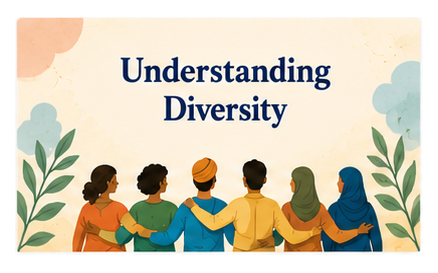
Explore the diversity of Indian society and learn how different cultures, languages, religions, and traditions come together to form a united nation. Understand the values of equality, respect, and national unity through simple examples.
भारतीय समाज की विविधता को जानें और समझें कि विभिन्न भाषाएँ, धर्म, संस्कृतियाँ और परंपराएँ मिलकर हमारे देश को एकता की शक्ति प्रदान करती हैं। समानता, सम्मान और राष्ट्रीय एकता के मूल्यों को सरल उदाहरणों के माध्यम से सीखें।
VIDEOS
Learn Our Society – Full of Diversity through engaging video lessons covering India’s diversity, culture, traditions, constitutional values, and national unity.
भाग 1: परिवार, समाज और विविधता
इस वीडियो में समाज का परिचय दिया गया है तथा परिवार और विद्यालय की भूमिका को समझाया गया है। विद्यार्थी भारत की भौगोलिक, धार्मिक और सांस्कृतिक विविधता के बारे में सीखते हैं और समझते हैं कि हमारा देश अनेकता में एकता का श्रेष्ठ उदाहरण क्यों है।
Part 1: Family, Society, and Diversity
This video introduces society and explains the importance of family and school in shaping values and responsible citizens. Students learn about India’s geographical, religious, and cultural diversity and understand why the country is known for its unique spirit of Unity in Diversity.
भाग 2: दैनिक जीवन में विविधता
इस वीडियो में भारत के विभिन्न क्षेत्रों के भोजन, भाषाओं, पहनावे तथा आजीविका की विविधता को समझाया गया है। विद्यार्थी सीखते हैं कि अलग-अलग परंपराओं के बावजूद लोग एक-दूसरे का सम्मान करते हुए मिल-जुलकर रहते हैं।
Part 2: Diversity in Daily Life
This lesson explains how diversity can be seen in food, languages, clothing, and occupations across India. Students discover how people from different regions follow different traditions while respecting one another and living together peacefully.
भाग 3: राष्ट्रीय एकता और संवैधानिक मूल्य
इस वीडियो में भारतीय होने की भावना, राष्ट्रीय एकता, सांप्रदायिक सद्भाव तथा संविधान के मूल्यों—न्याय, स्वतंत्रता, समानता और बंधुत्व—की व्याख्या की गई है। साथ ही समाज को जोड़ने वाले प्रमुख मेलों और त्योहारों के महत्व को भी समझाया गया है।
Part 3: National Unity and Constitutional Values
This video explains the idea of being an Indian and highlights the importance of national unity, communal harmony, and the values of justice, liberty, equality, and fraternity. Students also learn about important fairs and festivals that strengthen social unity and cultural identity.
Understanding Diversity
Learning Objectives
Students will understand the meaning of society and diversity and explore how India’s rich geographical, cultural, religious, linguistic, and economic diversity makes it unique. They will also learn about the importance of unity, constitutional values, and mutual respect in building a peaceful and inclusive society.
Introduction to Our Society
Society is formed by people who live together and support one another through shared values, responsibilities, and cooperation. The family is the first institution where children learn discipline, respect, kindness, and good behavior. Schools further strengthen these values by bringing together children from different backgrounds, helping them develop friendship, teamwork, and mutual understanding.
India is one of the most diverse countries in the world. People belonging to different cultures, religions, languages, and traditions live together peacefully, making Unity in Diversity one of the country’s greatest strengths.
Geographical and Cultural Diversity
India has a wide variety of geographical features, including mountains, plains, deserts, plateaus, rivers, forests, and coastal regions. These physical differences influence the climate, vegetation, occupations, and lifestyles of people living in different parts of the country.
India is also known for its rich cultural heritage. People celebrate numerous festivals, follow different customs, and practice different religions, yet they continue to live together with mutual respect and harmony.
Diversity in Language, Food, Clothing, and Occupations
India is home to hundreds of languages and dialects. The Constitution recognizes 22 official languages, while many more regional languages are spoken across the country. This linguistic diversity reflects the rich cultural heritage of India.
Food habits also vary from one region to another. Different states have their own traditional dishes based on local crops and climate. Similarly, clothing styles differ according to weather, culture, and traditions. People also earn their livelihoods through farming, fishing, animal husbandry, business, industries, government services, and many other occupations.
Despite these differences, all citizens contribute equally to the development of the nation.
Unity in Diversity
The phrase “Unity in Diversity” means that although people differ in language, religion, culture, food, and traditions, they remain united as one nation. Respecting diversity strengthens national integration and promotes peaceful coexistence.
India’s unity is reflected during national festivals, social celebrations, and times of difficulty, when people from different communities support one another.
Constitutional Values and National Identity
The Constitution of India guarantees every citizen Justice, Liberty, Equality, and Fraternity. These principles ensure equal rights, freedom, dignity, and opportunities for everyone.
Every Indian shares a common national identity while respecting regional traditions and cultural differences. National unity, communal harmony, and mutual respect are essential for the country’s progress and development.
Importance of Diversity
Diversity enriches society by introducing different ideas, traditions, skills, and cultures. Learning about one another’s customs encourages respect, cooperation, and understanding, helping create a peaceful and inclusive society.
Students should appreciate diversity and treat everyone equally, regardless of language, religion, caste, or culture.
Practice Questions
- What is meant by Unity in Diversity?
- Name any four types of diversity found in India.
- What role do family and school play in society?
- Name the four values mentioned in the Preamble of the Constitution.
- Why is diversity important for society?
Answer Key
ANSWER 1
Unity in Diversity means that people belonging to different religions, languages, cultures, and traditions live together peacefully as one nation.
ANSWER 2
The four major types of diversity found in India are geographical, cultural, linguistic, and religious diversity.
ANSWER 3
Family teaches values, discipline, and good behavior, while schools promote learning, cooperation, equality, and respect among children from different backgrounds.
ANSWER 4
The four constitutional values are Justice, Liberty, Equality, and Fraternity.
ANSWER 5
Diversity promotes mutual respect, cultural understanding, cooperation, and national unity while making society richer and more inclusive.
हमारा समाज – विविधता से भरा
सीखने के उद्देश्य
इस अध्याय में विद्यार्थी समाज और विविधता के अर्थ को समझेंगे तथा भारत की भौगोलिक, सांस्कृतिक, धार्मिक, भाषाई और आर्थिक विविधताओं का अध्ययन करेंगे। वे राष्ट्रीय एकता, संवैधानिक मूल्यों तथा परस्पर सम्मान के महत्व को समझेंगे और जानेंगे कि विविधता किस प्रकार हमारे समाज को समृद्ध और मजबूत बनाती है।
परिचय
समाज उन लोगों का समूह है जो मिल-जुलकर रहते हैं, एक-दूसरे का सहयोग करते हैं तथा साझा मूल्यों और जिम्मेदारियों का पालन करते हैं। परिवार बच्चों को अच्छे संस्कार, अनुशासन और नैतिक मूल्यों की शिक्षा देता है, जबकि विद्यालय उन्हें विभिन्न पृष्ठभूमियों के बच्चों के साथ मिलकर रहना, सहयोग करना और एक-दूसरे का सम्मान करना सिखाता है।
भारत विश्व के सबसे विविध देशों में से एक है। यहाँ अनेक भाषाएँ, धर्म, संस्कृतियाँ और परंपराएँ होने के बावजूद सभी लोग मिल-जुलकर रहते हैं। यही भावना “अनेकता में एकता” कहलाती है।
भौगोलिक एवं सांस्कृतिक विविधता
भारत में हिमालय, मैदान, मरुस्थल, पठार, नदियाँ, वन तथा समुद्री तट जैसे अनेक भौगोलिक क्षेत्र पाए जाते हैं। इन क्षेत्रों की जलवायु, प्राकृतिक संसाधन और जीवनशैली एक-दूसरे से भिन्न होती है।
भारत अपनी समृद्ध सांस्कृतिक विरासत के लिए भी प्रसिद्ध है। यहाँ विभिन्न धर्मों के लोग रहते हैं, अनेक त्योहार मनाए जाते हैं और अलग-अलग परंपराओं का पालन किया जाता है। फिर भी सभी लोग आपसी सम्मान और सद्भाव के साथ रहते हैं।
भाषा, भोजन, पहनावा और आजीविका में विविधता
भारत में सैकड़ों भाषाएँ और बोलियाँ बोली जाती हैं। भारतीय संविधान की आठवीं अनुसूची में 22 भाषाओं को मान्यता प्राप्त है। यह भाषाई विविधता भारत की सांस्कृतिक समृद्धि को दर्शाती है।
देश के विभिन्न भागों में भोजन, पहनावा और रहन-सहन भी अलग-अलग है। जलवायु, स्थानीय फसलें और संस्कृति लोगों की खान-पान तथा वेशभूषा को प्रभावित करती हैं। लोग कृषि, पशुपालन, मत्स्य पालन, व्यापार, उद्योग, सरकारी सेवाओं तथा अनेक अन्य व्यवसायों से अपनी आजीविका कमाते हैं।
अनेकता में एकता
“अनेकता में एकता” का अर्थ है कि भाषा, धर्म, संस्कृति, भोजन और परंपराओं में भिन्नता होने के बावजूद सभी भारतीय एक राष्ट्र के रूप में एकजुट रहते हैं। यही भावना राष्ट्रीय एकता को मजबूत बनाती है और समाज में शांति एवं सद्भाव बनाए रखती है।
राष्ट्रीय पर्वों, सामाजिक कार्यक्रमों तथा कठिन परिस्थितियों में सभी समुदाय मिलकर एक-दूसरे की सहायता करते हैं।
संवैधानिक मूल्य और राष्ट्रीय पहचान
भारतीय संविधान प्रत्येक नागरिक को न्याय, स्वतंत्रता, समानता और बंधुत्व का अधिकार प्रदान करता है। ये मूल्य प्रत्येक व्यक्ति के सम्मान, समान अवसर और स्वतंत्र जीवन को सुनिश्चित करते हैं।
हम सभी अपनी क्षेत्रीय पहचान के साथ-साथ सबसे पहले भारतीय हैं। राष्ट्रीय एकता, सांप्रदायिक सद्भाव और परस्पर सम्मान देश की प्रगति के लिए अत्यंत आवश्यक हैं।
विविधता का महत्व
विविधता समाज को समृद्ध बनाती है। विभिन्न संस्कृतियों, विचारों, परंपराओं और जीवनशैलियों को जानने से आपसी सम्मान, सहयोग और भाईचारे की भावना विकसित होती है। प्रत्येक नागरिक का कर्तव्य है कि वह सभी लोगों के साथ समान व्यवहार करे तथा भारत की विविधता का सम्मान करे।
अभ्यास प्रश्न
- अनेकता में एकता का क्या अर्थ है?
- भारत में पाई जाने वाली चार प्रकार की विविधताओं के नाम लिखिए।
- समाज में परिवार और विद्यालय की क्या भूमिका है?
- संविधान की प्रस्तावना में बताए गए चार प्रमुख मूल्यों के नाम लिखिए।
- समाज में विविधता का क्या महत्व है?
उत्तर
उत्तर 1
अनेकता में एकता का अर्थ है कि विभिन्न धर्मों, भाषाओं, संस्कृतियों और परंपराओं के लोग एक राष्ट्र के रूप में प्रेम और सद्भाव के साथ मिलकर रहते हैं।
उत्तर 2
भारत में प्रमुख रूप से भौगोलिक, सांस्कृतिक, धार्मिक तथा भाषाई विविधता पाई जाती है।
उत्तर 3
परिवार बच्चों को अच्छे संस्कार और नैतिक मूल्य सिखाता है, जबकि विद्यालय अनुशासन, सहयोग, समानता और विभिन्न पृष्ठभूमियों के लोगों के साथ मिलकर रहने की शिक्षा देता है।
उत्तर 4
संविधान की प्रस्तावना के चार प्रमुख मूल्य हैं—न्याय, स्वतंत्रता, समानता और बंधुत्व।
उत्तर 5
विविधता समाज में आपसी सम्मान, सहयोग, सांस्कृतिक समझ और राष्ट्रीय एकता को बढ़ावा देती है तथा समाज को अधिक समृद्ध और समावेशी बनाती है।